Handcrafted vs. Factory-Made Furniture: Is the Difference Worth It?
furnishflow >> Materials & Craftsmanship>> Handcrafted vs. Factory-Made Furniture: Is the Difference Worth It?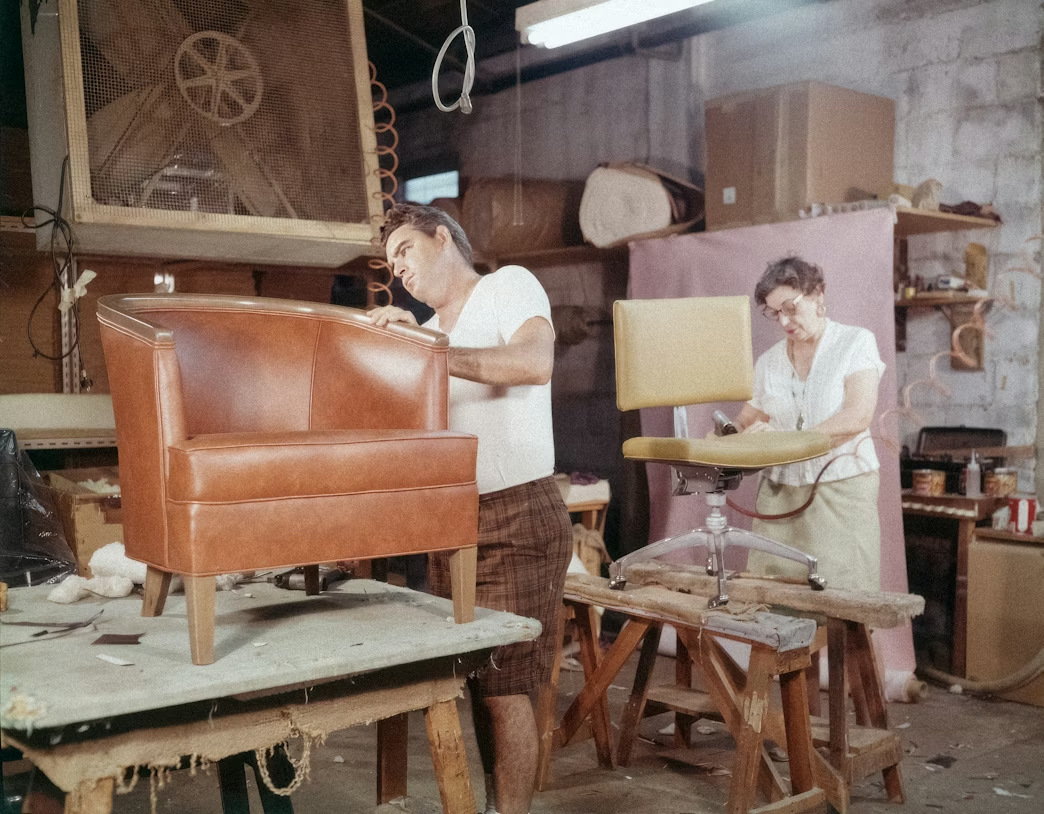
Handcrafted vs. Factory-Made Furniture: Is the Difference Worth It?
The idea of handcrafted furniture carries weight. It suggests skill, care, and individuality. Factory-made furniture, by comparison, is often associated with speed and compromise. In practice, the difference is rarely that simple. What matters is not how a piece is made, but whether the method suits how it will be used.
What “Handcrafted” Actually Means Today
Handcrafted furniture usually involves skilled labor at key stages of production. Joinery may be done by hand. Finishing often receives more individual attention. Small workshops tend to build fewer pieces, allowing adjustments that machines cannot easily replicate.
That said, handcrafted does not automatically mean flawless. Consistency depends on the maker’s experience. Some handcrafted pieces excel in detail but lack long-term structural testing. Others are built beautifully but require careful maintenance.
Handcrafted furniture often favors character over uniformity. For some buyers, that uniqueness adds value. For others, it introduces uncertainty.
How Factory-Made Furniture Is Built
Factory-made furniture benefits from repetition and control. Machines cut components with precision. Processes are tested across thousands of units. This consistency reduces surprises and keeps prices accessible.
Modern factories vary widely. High-end manufacturers combine automated processes with skilled oversight. Lower-end factories focus on speed and cost reduction. The result can range from well-engineered furniture to disposable products.
Factory production excels at stability and predictability. If you value uniform dimensions, repeatable comfort, and standardized parts, factory-made furniture often delivers reliably.
Durability Comes From Systems, Not Labels
Furniture doesn’t fail because it was handmade or factory-made. It fails because of weak joints, poor materials, or shortcuts in construction. A handcrafted table with weak joinery won’t outlast a factory-made one with reinforced joints and tested design.
Durability is the result of material selection, structural planning, and quality control. Some factories test furniture under repeated stress. Some workshops rely on tradition and experience. Both approaches can succeed—or fail.
The method matters less than the execution.
Cost, Value, and What You’re Paying For
Handcrafted furniture usually costs more. That price reflects labor, time, and lower production volume. You’re often paying for individuality, adjustability, and direct maker involvement.
Factory-made furniture spreads costs across scale. You pay less per unit, but customization is limited. Repairs may rely on standardized parts rather than bespoke fixes.
Value depends on intent. If you want a long-term statement piece, handcrafted furniture may justify the cost. If you want reliable function at a controlled price, factory-made options often make more sense.
Maintenance and Long-Term Ownership
Handcrafted furniture may require more care. Natural finishes, solid wood, and traditional joinery respond to environment and use. Repair is usually possible, but may involve the original maker.
Factory-made furniture often prioritizes low maintenance. Finishes are designed to resist wear. Replacement parts may be available, but repairability varies by brand.
Ownership experience differs. One rewards involvement. The other emphasizes convenience.
When the Difference Is Worth It
The difference is worth it when it aligns with expectations. Handcrafted furniture shines in spaces where individuality matters and use is intentional. Factory-made furniture excels in high-use environments where consistency and replaceability are important.
Neither option is inherently superior. The mistake lies in assuming one guarantees quality.
Making the Right Choice
Instead of asking which is better, ask what fits your life. Consider how the furniture will be used, how much maintenance you accept, and how long you expect it to stay.
When production method supports function, comfort, and durability, the choice becomes clear. That alignment—not the label—is what ultimately makes the difference worth it.